Microsoft Ignite 2026: the announcements worth your time
At Microsoft Ignite, the focus is on mastering AI agents. Here is an overview of Copilot Workspaces, Autopilot, Agent 365, and Windows Server 2028 and what they mean for your organisation.
Microsoft Ignite is running from 17 to 20 November in San Francisco, and the big theme is getting AI agents under control. Here’s what’s been announced so far, and what it means for your organisation.
Under the banner “Building the frontier ecosystem”, three themes run through everything: human ambition, intelligence and trust. Microsoft’s mission hasn’t changed. It still wants to help every person and organisation on the planet achieve more, and to turn technology into real results for people, businesses and society. You’ll find everything announced in the Book of News.
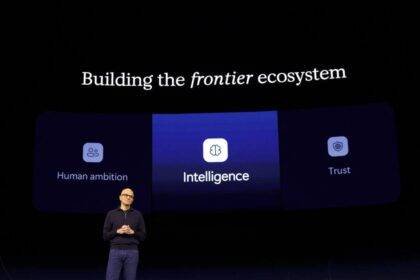
Human ambition: what does AI mean for your people’s work?
AI should serve people, not the other way round. Every role in your organisation will feel it, which is why Microsoft now positions Copilot as the new operating system for work. The main new pieces:
- Copilot Workspaces: a shared space where people and agents work together as a team.
- Autopilot: a long-running agent that picks up recurring tasks and moves projects along without anyone prompting it each time. It has its own identity, a named manager and its own audit trail.
- Copilot Code: lets anyone build dashboards, trackers and apps by describing what they want in plain language, with security and governance built in.
- Copilot Managed Runtime: a managed place to run the apps your people build with AI. This one is generally available.
For you, the question shifts. It’s no longer just “are people adopting Copilot?” It’s “how do we keep control of the apps people build themselves, and of agents that act on their own?”
Intelligence: how do you keep your knowledge, and the value it creates, inside your organisation?
Agents are only as good as the context they work from. Microsoft IQ is the platform for capturing, managing and reusing company knowledge, so you build your own intelligence without handing over your IP. Business plugins let you share that knowledge, along with skills and tools, across the organisation. In Microsoft Foundry, agents and models also keep improving based on signals from production.
A useful question to ask yourself: where does your organisation’s unique knowledge actually live, and can Copilot and agents find and use it?
Trust: how do you stay in control of agents that act on their own?
Once agents stop just answering questions and start doing things, trust decides everything. Innovation and safety shouldn’t be a trade-off. The principle is to separate intelligence from authority. An agent can advise and reason, but the right to act is granted separately and explicitly.
The main governance announcements:
- Agent 365: Business Analytics shows what AI costs and what it delivers (FinOps for AI). Agents from other platforms, such as Amazon Bedrock, Google and Anthropic, also come within reach of management.
- Windows: stronger protection for agents at operating system level, with agent identity through Entra and Agent 365 policy on every device.
- Microsoft Perception: now generally available. Specialised agents find vulnerabilities, defend against them and fix them.
- Intune, Purview and Defender: security and compliance extended to agents, including local AI in Defender.
What about your infrastructure?
There’s news for on-premises and hybrid setups too. Windows Server 2028 is in preview, with a focus on local AI: running AI close to your data, on infrastructure you manage. That’s worth a look if you have strict requirements on where data sits.
What can you do now?
Over the next few weeks, work out which themes matter for your organisation. Start with three questions. Which roles will AI change first? Where does your company knowledge sit? Which actions should an agent be allowed to take on its own? Then check availability and licensing for each announcement in the Book of News, because not everything is generally available yet.
Want the short version? We’re running a Microsoft Ignite Update Session in December, covering what the announcements mean for your organisation so stay tuned!

Question?
Our specialists have the answer