Azure capacity constraints: the role of hybrid cloud in the age of data sovereignty and AI
Azure capacity limits are hitting UK workloads. Here's how a hybrid cloud approach balances cost, resilience and data sovereignty when public cloud is constrained.
Public cloud has transformed the way organisations consume technology. IT capacity has evolved from fixed asset to on-demand utility, with the nature of these hyperscale platforms providing whole new areas of capability.
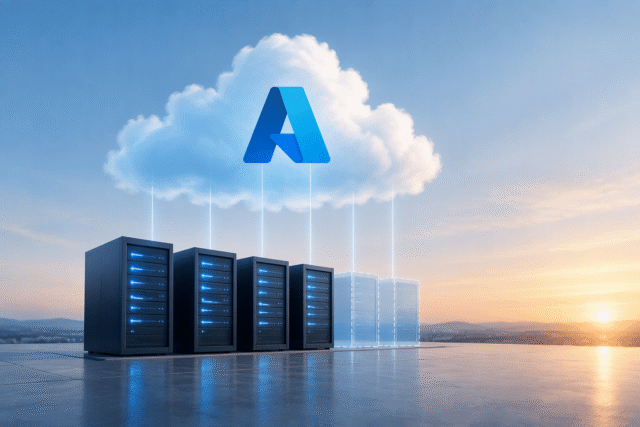
But hyperscale does not mean infinite. Since mid-2025 and throughout 2026, the “big three” public cloud providers – Microsoft, Amazon, and Google – have suffered from capacity and availability challenges.
Microsoft started manual review and capacity quotas for UK-based workload requests in late 2025 and expect to continue to do so for the foreseeable future.
This doesn’t change the value of public cloud services. If anything, AI tools, data platforms, and global reach are more important than ever. But it does bring into focus questions around return on investment, resilience, and compliance.
Why Azure capacity is under pressure
The rapid growth of cloud and AI is placing significant demand on hyperscale infrastructure. Not just the servers and networking, but the power available at each location.
That pressure has practical consequences for organisations. Challenges include delays in provisioning new resources and service disruption when VM scale sets fail to scale back up after scaling down.
This can result in disruption to projects, user downtime, and unplanned costs as previously usage-based resources become always-on to protect critical resources.
Microsoft has recommended a multi-region approach and identified alternative European Azure regions when capacity is constrained. However, organisations with specific UK data residency requirements may not have that luxury.
Technology is a toolkit
Capacity constraints do not mean Azure has stopped being a valuable part of a modern organisations’ technology toolkit. It still offers industry-leading, enterprise-grade capabilities of very significant value for the right workloads.
What these recent challenges highlight is something broader: what are the ‘right’ workloads, what might sit better elsewhere, and how does your organisation tie that together into a seamless, secure technology stack?
Until a few years ago, there was still a conversation about what would be the future of cloud services – public or private. That false dichotomy has been put to rest; public cloud isn’t a fad, and private cloud isn’t dead.
The question has shifted to how to optimise by making smart use of both.
What should organisations be considering?
These challenges put extra emphasis on a few key points when considering your IT roadmap.
1) Plan capacity and confirm requirements earlier
Capacity should now form part of infrastructure planning, particularly for major migrations, AI projects, and where specific Azure services are required. Testing and right-sizing has traditionally been handled late in a project’s lifecycle. These should now be brought forward to avoid inconvenient surprises in the form of extra cost or avoidable delays.
2) Review your scaling strategy
Autoscaling is a powerful tool, but organisations should consider the potential implications of releasing capacity that may subsequently be difficult to regain. Understand what costs could look like with and without it. The difference can be substantial.
3) Understand your options – and use them
Where requirements allow, consider deploying resources to Azure regions beyond your primary. Also consider whether switching VM families is an option for certain workloads. Capacity constraints also pose challenges for Disaster Recovery measures, which rely on rapid scale-up when invoked. For particularly critical workloads, explore whether hybrid configurations can offer a better balance of value, cost and risk.
4) Consider what fits where
Not all workloads are equal. When planning technology projects, it’s important to understand not just about what a workload does, but how it does it. This is always true, but capacity challenges make it all the more important.
Static workloads are typically more cost-effective in private cloud environments. If you don’t need bells and whistles for your line of business application server, why pay over the odds for it?
Conversely, development, AI and data-driven workloads lend themselves more to Azure. Modern DevOps practices have substantial benefits, and public cloud offers modern data capabilities you can’t recreate at home.
None of the above points should be considered in isolation. Things like latency tolerance and data residency need to be accounted for.
Hybrid is not a halfway house, it’s an extension
One of the traditional objections to hybrid infrastructure is additional operational complexity. This was once true, but the distinction between public cloud and private infrastructure has blurred.
Ekco’s hybrid cloud approach uses Microsoft Azure Arc alongside Ekco-hosted Hyper-V infrastructure, providing a unified operating model that isn’t tied to a single platform.
The single management pane keeps management and oversight simple, while the underlying technologies expand your options, rather than having to live with the limitations of either one in isolation. For those with data residency requirements, the private component ensures you know exactly where your data sits.
This is a deliberate choice, reflecting the changing landscape of platforms, tooling, and business requirements. It means not every workload must run exclusively within the public cloud, nor entirely within the confines of the private cloud.
Capacity, capability, and confidence
Cloud capacity has often been treated as effectively infinite from the end users’ perspective. The last 18 months have dispelled that illusion. But capacity is a facet of resilience, which means it should inform architecture and transformation planning.
As of November 2026, Microsoft continues to see demand exceeding current availability. Further complicating the picture, planned third-party GPU capacity expansion has now been delayed, which means demand also outstrips anticipated short-midterm capacity growth.
At Ekco, we help customers make the most out of their technology spend. We recognise that everything from architecture to administration exist solely to deliver business outcomes. Optimising for those outcomes should be the guiding principle.
The strongest infrastructure strategy isn’t necessarily cloud-only or hybrid. It’s one that keeps delivering for your business when circumstances change.
Learn more about the latest Microsoft changes affecting your organisation, and what to do about them.

Question?
Our specialists have the answer