Cybersecurity Risks of the EU Council Presidency
Why the Rotating Presidency Faces Increased Threats
The EU Council Presidency: Rising Cybersecurity and Geopolitical Risks
Background Information
The presidency of the Council of the European Union is a responsibility that is rotated between the member states every six months. During the presidency term, the country is the host to chair meetings at every level of the European Council. Introduced as part of the Lisbon treaty in 2009, three countries are selected to form a presidency “trio”. The trio sets long-term goals and defines a common agenda to determine what the focus of the council will be over the 18-month period. Each member of the trio will then prepare a more detailed plan of the topics and issues that will be focused on over their 6-month programme. The current trio consists of the member countries Poland, Denmark and Cyprus with the presidency switching from Denmark to Cyprus in January 2026.
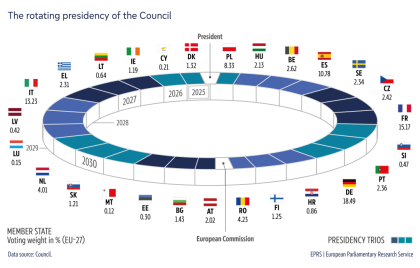
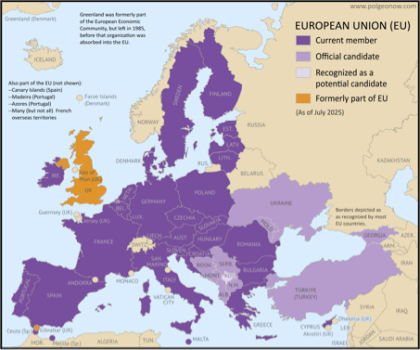
This rotation brings more than administrative responsibility. As the next member state assumes the presidency, its geopolitical exposure rises across diplomatic, cyber, and intelligence domains. While the presidency itself does not create new adversaries, it significantly raises the intelligence value of the host nation’s political, diplomatic, and digital infrastructure. The member state temporarily becomes an intelligence hub of concentrated policy materials such as draft positions, negotiation schedules, internal disputes, sanctions discussions, sensitive briefings and diplomatic traffic with 26 other member states.
Cyber Risks
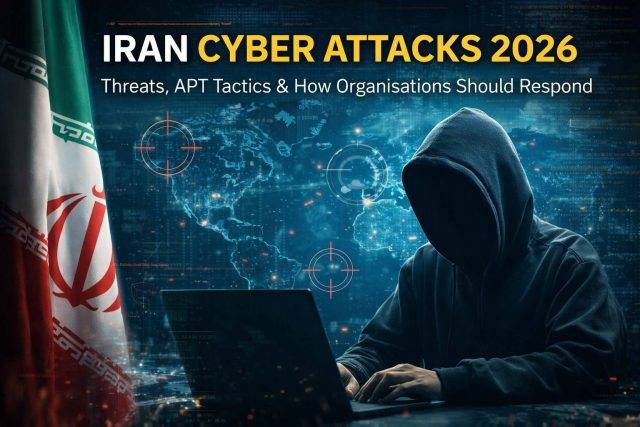
Russia, Iran and China are increasingly co-operating on issues related to cybersecurity and intelligence. These nations oppose Western democracy and seek to sow division, thereby weakening the EU, whose member states already hold differing strategic geopolitical outlooks and are therefore not universally aligned. Any weakening of the EU serves to bolster the influence of China, Russia and Iran in the global cyber ecosystem.
Attacks against EU members include cyberespionage, ransomware, disinformation campaigns and campaigns against Critical Nation Infrastructure (CNI). State-aligned actors, particularly from China, Russia, and Iran, have a demonstrated history of targeting diplomatic networks to gain insight into EU decision-making, policy alignment, and negotiation positions. Russia-linked operators may deploy hacktivist fronts, DDoS waves, or disinformation campaigns aimed at undermining the presidency or disrupting agenda items. Chinese-linked APTs such as APT15, APT31 and SharpPanda have repeatedly targeted European foreign ministries, ambassadors and EU-adjacent policy staff. These groups prioritise access to negotiation details, internal divisions among EU states, and early drafts of policy proposals, all of which proliferate during a presidency.
The presidency also introduces new attack vectors with potential increases in phishing and social engineering attempts against diplomats. Member states can expect intensified spear-phishing targeting diplomats and delegates, credential harvesting campaigns aimed at cloud services and remote access-points, and malware operations designed to extract classified information. These risks often extend across the national ecosystem, targeting communication platforms, private-sector partners, policy advisers and public-facing government services.
Cypriot Cyber Defences
In June 2024 Cyprus launched its National Cybersecurity Coordination Centre, aimed at building an integrated national cybersecurity ecosystem. The centre forms part of a wider set of initiatives aimed at strengthening the country’s economic and societal resilience against escalating cyber threats. The Cypriot government emphasised their strategy of prevention, incident management and the protection of critical infrastructure. Security in Cyprus is now embedded across all public-sector technological projects.
Mitigation
Organisations operating within the EU can put measures in place to prevent hostile activity including:
- Threat Monitoring
- Regular Updates and Patch Management
- Network Segmentation
- Multi Factor Authentication
- Endpoint Security
- Physical Security and a culture of Cyber Awareness
- Incident Response
The threats posed to the EU serve as a reminder of the importance of securing your digital estate. Defence against cyber threats relies not only on advanced technology, but also on a strong culture of security and continuous awareness.
At Ekco, we turn these challenges into opportunities for resilience. Our approach combines state-of-the-art tools with expert threat intelligence and practical, employee-focused training, empowering organisations to stay ahead of evolving risks.
Partner with us to strengthen your defences and build lasting confidence in your security.



Question?
Our specialists have the answer