Copilot doesn’t create risk. It finds the risk you already had.
By Colin Riddle, Chief Product Officer, Ekco Cloud & Security
A lot of the anxiety around AI adoption gets framed as a question about the AI itself: is it safe, can it be trusted with our data, what happens if it gets something wrong.
Those are reasonable questions, but they tend to obscure a more useful one – is the data we’re about to point an AI tool at actually in a state that’s safe for anyone, human or otherwise, to search across.
Where the confidence gap actually is
Most organisations, if you ask them directly, will say their data is reasonably well organised. Ask a more specific question – what’s sitting in your oldest file share, or who still has standing access to a SharePoint site nobody’s actively used in two years – and the confidence tends to drop quickly.
That gap is worth taking seriously, because it’s precisely what an AI tool like Copilot changes the stakes on.
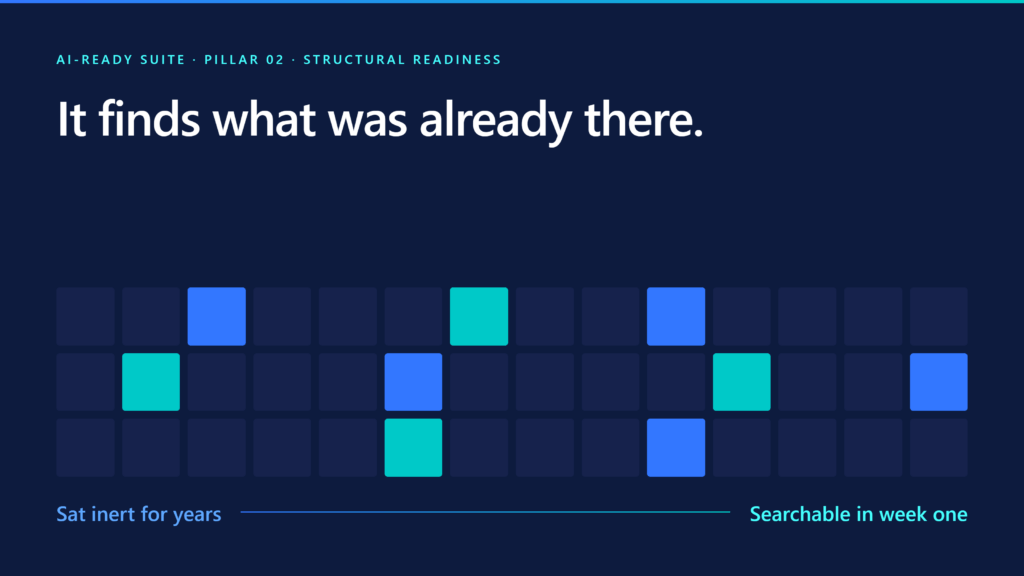
It finds what was already there
Unstructured data and permissions sprawl aren’t new problems. They’ve existed in most organisations for years, quietly, without causing much visible harm, because nobody was systematically searching across all of it at once. A duplicated document, a misfiled contract, a folder with permissions that were set correctly in 2019 and never revisited – on their own, these things sit inert.
Point a tool at the estate that can search, summarise and surface content across everything a user has access to, and every one of those quiet inconsistencies becomes something that might get served up, out of context, to the wrong person, at the wrong moment.
This is the honest answer to “is AI safe with our data”: it depends entirely on what’s already true about your data, not on the AI.
Copilot doesn’t introduce a new category of risk. It applies a very capable search function to an estate that, in most organisations, hasn’t been audited with that kind of scrutiny in mind. It finds what was already there
Why promising pilots get pulled back
That’s why the most common reason we see promising AI pilots quietly get pulled back isn’t a failure of the tool – it’s what the tool surfaces in week one, before anyone’s had a chance to think about governance.
Once that happens, trust in the whole initiative erodes fast, and it’s considerably harder to restart a stalled rollout than to sequence it correctly from the outset.
The correct sequence
The correct sequence is the less glamorous one: understand what’s actually in your data estate, what’s fit for migration, what should be archived, and what’s creating unnecessary exposure – before any AI tool goes anywhere near it.
The same logic applies to devices and identity: an endpoint estate with inconsistent compliance and access controls creates exactly the same category of risk from a different angle.
What the assessment actually involves
This is a diagnostic exercise, not a large undertaking. A structured review of your data estate against what modern collaboration tools actually require.
What Ekco delivers through the M365 Data Readiness Assessment, alongside an Endpoint Compliance Assessment for the device and identity side typically takes a matter of days and tells you specifically what needs attention before adoption, not after.
What separates the organisations that get value from AI
The organisations that get the most value out of AI aren’t the ones that moved fastest. They’re the ones that checked what they were pointing it at first.
Start with what your data estate actually looks like, and the rest of the AI conversation tends to go a great deal more smoothly.
And why not sign up for our short webinar series on how to get AI-Ready?
Four short webinars available to watch live or on demand after each session.


Question?
Our specialists have the answer